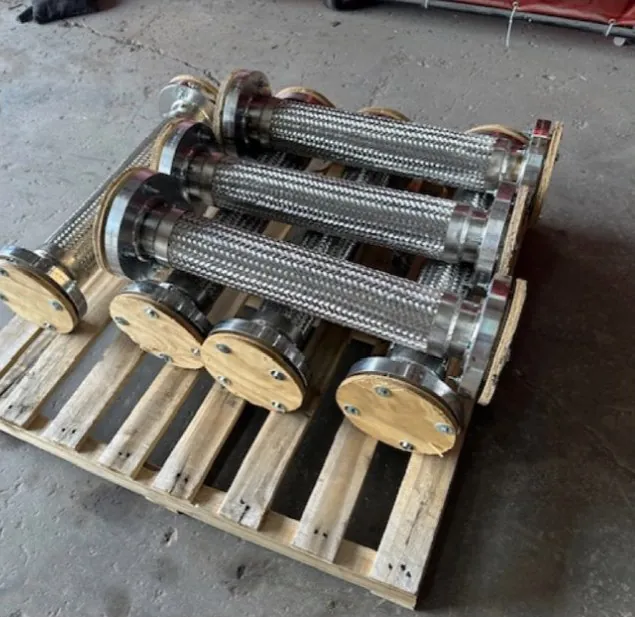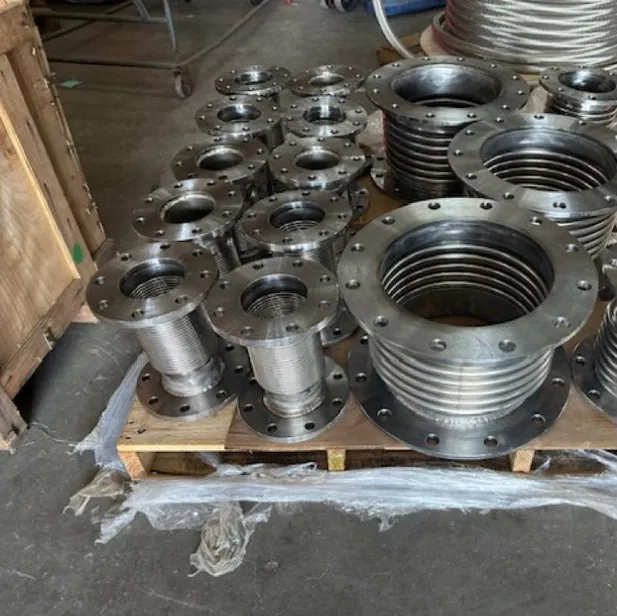
How a single expansion joint works
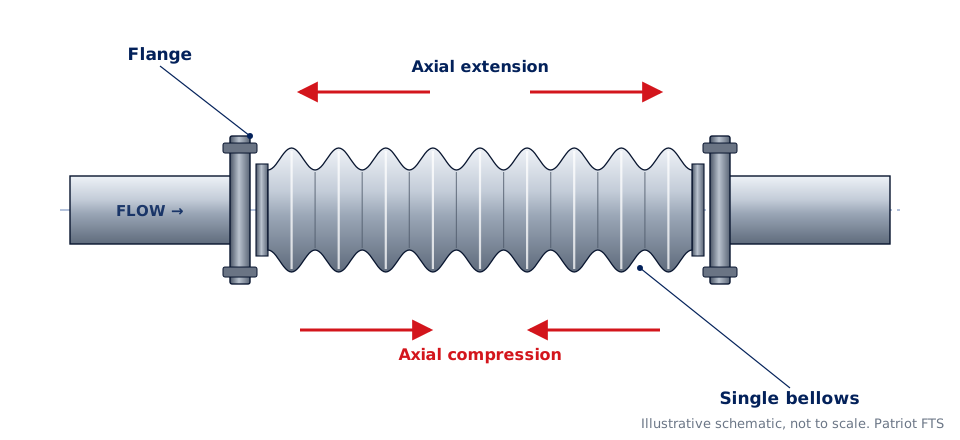
A single metal expansion joint is one bellows welded to two end fittings. When the pipe between two anchors heats up and grows, the bellows compresses; when it cools, the bellows extends back. Because nothing ties the two ends together, the joint is free to move axially, and it can take small amounts of lateral offset and angular rotation as well.
It is the lowest-cost and shortest metal joint for a given movement, which is why it is so common on long straight runs of steam, condensate, hot water and process piping.
Where single joints are used
- Long straight runs between two main anchors, such as steam and condensate headers.
- Hot water and chilled water mains in plants, campuses and high-rise risers.
- Process lines where space for a loop is not available.
- Exhaust and low-pressure duct where axial growth dominates.
A straight run with one joint is divided into sections by anchors, and each section gets its own joint. The joint is normally placed close to one of the anchors.
Pressure thrust and main anchors
An untied single joint cannot contain its own pressure thrust. The internal pressure acts on the bellows effective area and pushes the anchors apart with a force of P × Ae. The main anchors at each end of the section must be designed for that thrust plus the bellows spring force and the friction of the pipe guides. Anchor design customarily considers the test pressure, often 1.5 times design pressure, because the joint sees that pressure during the hydrotest.
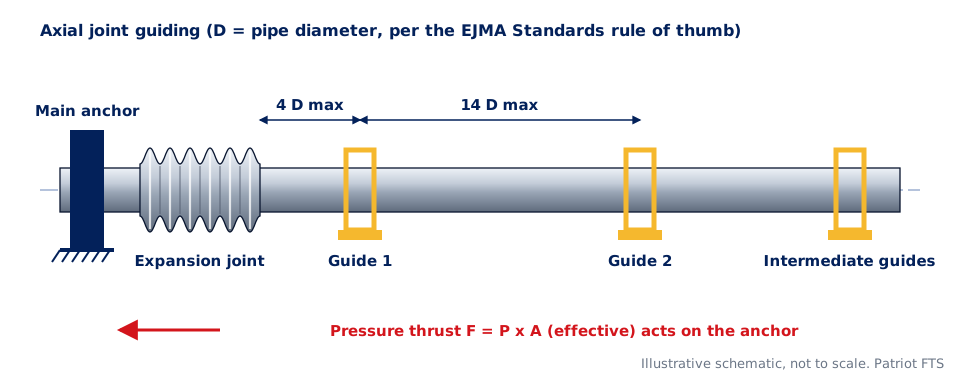
Guides keep the pipe from bowing under thrust and direct the growth straight into the bellows. Without them, an axial joint will push the line sideways and the bellows can squirm. See pressure thrust, anchors and guides for the full method.
Tied single expansion joints
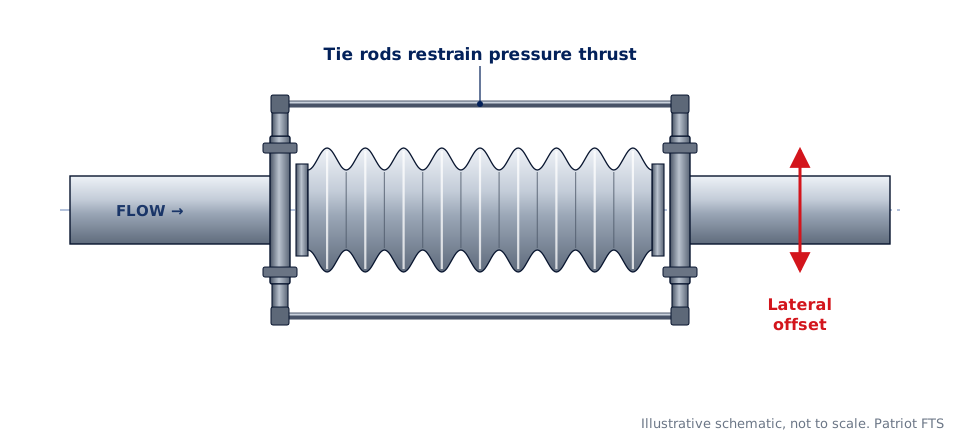
Adding tie rods across the bellows changes how the joint behaves. The rods carry the pressure thrust, so the main anchors no longer have to, but the joint can no longer absorb axial growth in the pipe beyond its own length. Instead, a tied single joint takes lateral offset and some angular rotation. It is used where anchors are impractical or near equipment that cannot take thrust loads.
Limit rods are different: they are set with a gap so the joint moves freely in normal service and only engage if an anchor fails, preventing over-extension.
Options
- Internal liner for high-velocity or erosive flow. Install with the flow arrow downstream.
- External cover to protect the bellows from insulation, weld spatter and impact.
- Limit rods to restrict over-extension if an anchor fails.
- Precompression or prestretch so the bellows works evenly about its neutral length.
Specifying a single expansion joint
Send the pipe size, end connections, design and test pressure, temperature, media, axial compression and extension from the installed position, number of cycles, available face to face length and any options. Note where the main anchors and guides are or will be.