Why UHMWPE
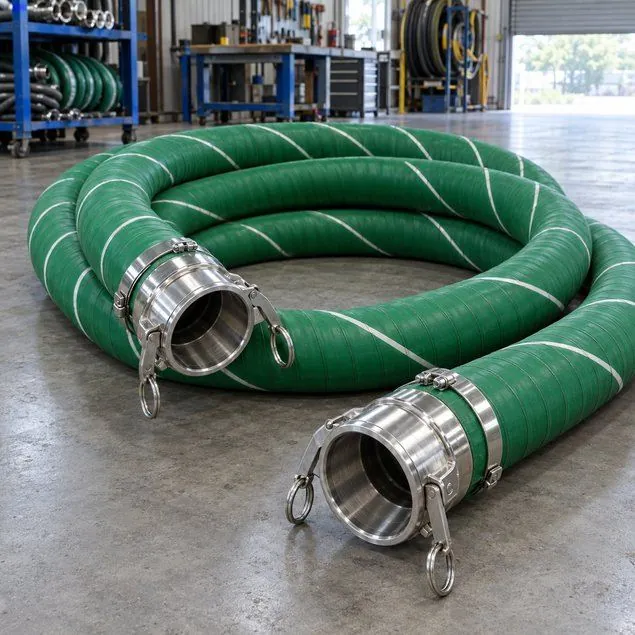
UHMWPE has become the default tube for general chemical transfer. UHMWPE hose is commonly rated for acids, alkalis, salts and organic compounds, including aromatics, chlorinated hydrocarbons and oxidizing acids, subject to the maker’s resistance chart. The tube is also slick and abrasion resistant, so it drains well and holds up to slurry-laden chemicals.
- Broad compatibility lets one hose handle many products, which helps with tank truck and terminal service.
- Low friction helps flow and cleaning.
- Helix reinforcement lets the hose run in suction as well as pressure service.
UHMWPE vs XLPE
Both are polyethylene tubes, and both are a big step up from rubber for chemical service. At least one major hose maker discontinued its XLPE line because UHMWPE offered higher temperature capability and wider chemical compatibility at comparable cost. XLPE is still a sound, economical choice for many common chemicals; see our XLPE chemical hose page.
Limits to check
- Chemical, concentration and temperature together. A chemical rated A at room temperature can drop to B or X when hot or concentrated, so every combination needs checking against the maker’s chart.
- Stay below the boiling point. Keep the media below its boiling point.
- Flush after use so leftover chemical doesn’t concentrate in the hose.
- Static. Ask for a conductive tube for flammable media.
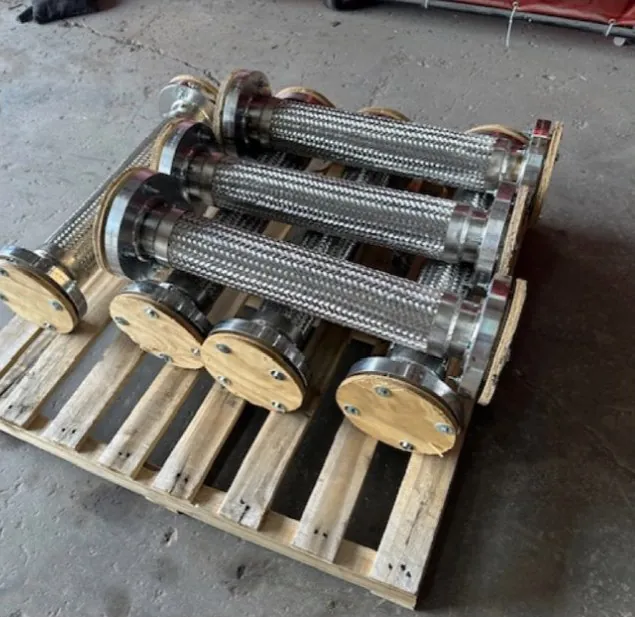
For the hottest or most aggressive service, consider PTFE hose or alloy metal hose.
What we need
- Chemical name and concentration
- Temperature
- Pressure or vacuum
- Size and length
- End fittings and material
- Flammable media (conductive tube)
From the Technical Reference
Tools for this job
Free tools you can use now, then email the result to Patriot FTS for a quote.
Ratings and dimensions are confirmed by Patriot FTS at quote.