Start with STAMPED
The hose industry uses the STAMPED checklist to capture what an assembly needs. It breaks down as:
| Letter | Means | Tell us |
|---|---|---|
| S | Size | Inside diameter and overall length |
| T | Temperature | Media and ambient, minimum and maximum |
| A | Application | Pressure, suction or gravity; routing; handling |
| M | Material | Chemical name and concentration |
| P | Pressure | Operating pressure, surges and vacuum |
| E | Ends | Coupling type, size and material |
| D | Delivery | Flow rate and velocity |
One more rule worth repeating: rate the assembly by its lowest-rated component. A 200 psi hose with a 100 psi coupling is a 100 psi assembly.
Tube materials compared
| Tube | Our sizes | Temp °F | Working pressure | Where it fits |
|---|---|---|---|---|
| Rubber (EPDM, nitrile) | By product | By compound | By product | EPDM for water-based media, nitrile for oils |
| XLPE | 1"–4" | -40 to +250 | 200 psi | Common chemicals, economical |
| UHMWPE | 1"–6" | -40 to +250 | 200 psi | Broad chemical service |
| PTFE | 1/2"–4" | Up to +400 | Up to 1,425 psi | Aggressive chemicals, heat, pressure |
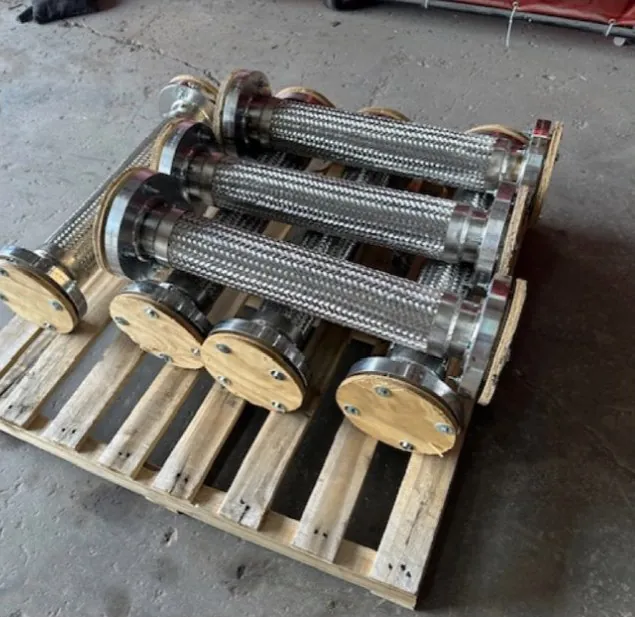
| Alloy metal hose | By series | Well above PTFE | By series | Extreme heat, fire exposure, permeation concerns |
Our ranges from the Patriot product catalog. EPDM is generally rated excellent for water-based media but poor for oil-based media, while nitrile is excellent for oil-based media.
Reading a compatibility chart
Makers rate each chemical, usually A (good), B (conditional) or X (not recommended), and often at several temperatures and concentrations. Published charts show the same acid going from A to X as concentration and temperature rise. So "acid" is not enough: we need the chemical, the concentration and the temperature together. Mixtures and trace components matter too.
Common mistakes
- Checking only the tube. The cover, the fittings and the seals must suit the chemical as well.
- Ignoring temperature. A rating at 70°F does not hold at 200°F.
- Leaving chemical in the hose. Unflushed residue can concentrate and attack the tube.
- Forgetting static. Flammable or low-conductivity media need a conductive path to ground.
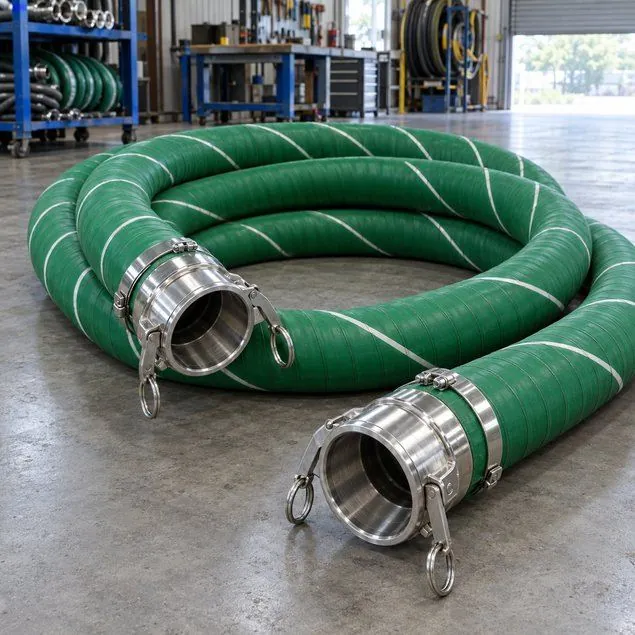
- Using a discharge-only hose for suction. Suction needs a helix-reinforced hose.
From the Technical Reference
Tools for this job
Free tools you can use now, then email the result to Patriot FTS for a quote.
Ratings and dimensions are confirmed by Patriot FTS at quote.