How a flexible U-loop works
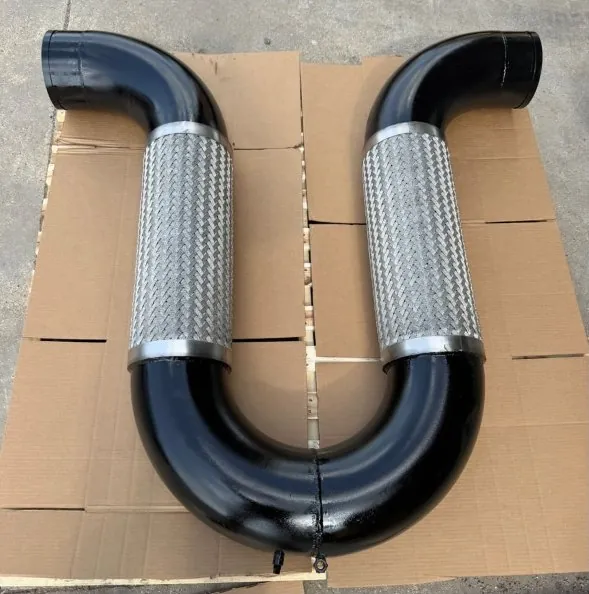
A U-loop is two parallel legs of braided metal hose joined by a 180° return fitting, installed perpendicular to the pipe run. When the pipe grows or shifts, the legs flex in lateral offset and angular motion instead of being pushed or pulled along their axis. Because the hose never sees axial compression or torsion, it can absorb movement in every direction.
The legs need enough live length so that the offset stays within the hose's elastic limit. Sized that way, the loop can flex for the life of the system.
Why use a flexible loop
- Moves in X, Y and Z. Handles thermal growth, building settlement and seismic movement in one assembly.
- No pressure thrust. Flexible loops develop no pressure thrust, so anchors mainly resist friction and the force to flex the loop. Your piping engineer sets anchor locations, loads and guides.
- Compact. Takes less space than a hard-pipe expansion loop.
- No pressure thrust. Unlike an unrestrained bellows joint, a braided hose loop does not push the pipe apart under pressure.
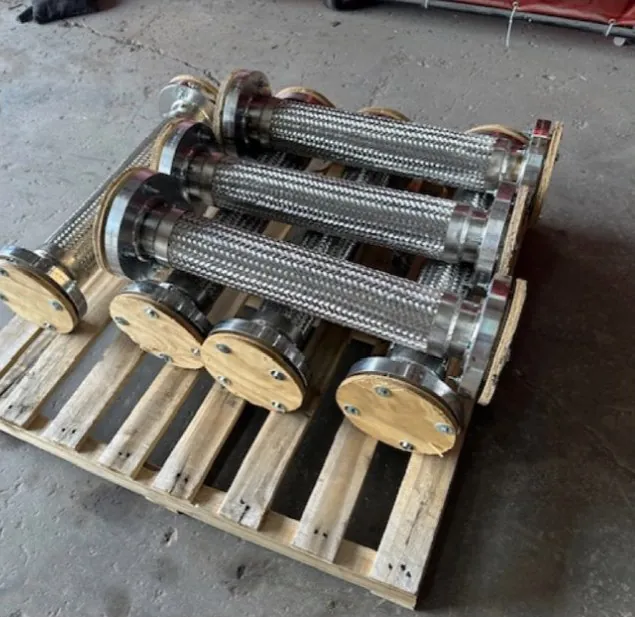
Our 316 stainless U-loops are used for thermal growth, structural displacement and building-joint crossings in process, utility, steam and chilled-water piping.
Construction
| Component | Standard | Options |
|---|---|---|
| Hose | 316 stainless annular corrugated | Other alloys for corrosive service |
| Braid | Stainless, single braid | Double braid for higher pressure or steam |
| Return | 180° return fitting | Support lug, drain or vent on request |
| Ends | Flanged, grooved or butt-weld | Custom ends to your drawing |
Final dimensions, pressure rating and movement capacity are set during application review and confirmed on the quote.
Installation basics
- Place it between anchors. A loop can sit anywhere in the run between anchors, as long as the return is free to move so each leg flexes equally.
- Support the return so it can move. Larger loops need the 180° return supported, with a hanger that allows it to travel as the loop flexes. A spring or swivel hanger is common.
- Prevent sag. In horizontal installations, support the arms so the hose does not sag.
- Don't twist. Align the end connections without torquing the hose.
See the full installation and bend radius guide and the expansion loop sizing guide.
What we need to quote a U-loop
- Nominal pipe size and schedule
- Pipe and fitting material
- Fluid or gas conveyed
- Operating, design and test pressure
- Minimum and maximum temperature
- Movement in each direction
- End type and pressure class
- Installation orientation
- Available length, width and height
- Piping code and listings required
- Quantity
- Drawing or field sketch
From the Technical Reference
Tools for this job
Free tools you can use now, then email the result to Patriot FTS for a quote.
Ratings and dimensions are confirmed by Patriot FTS at quote.