What a dog-leg assembly is
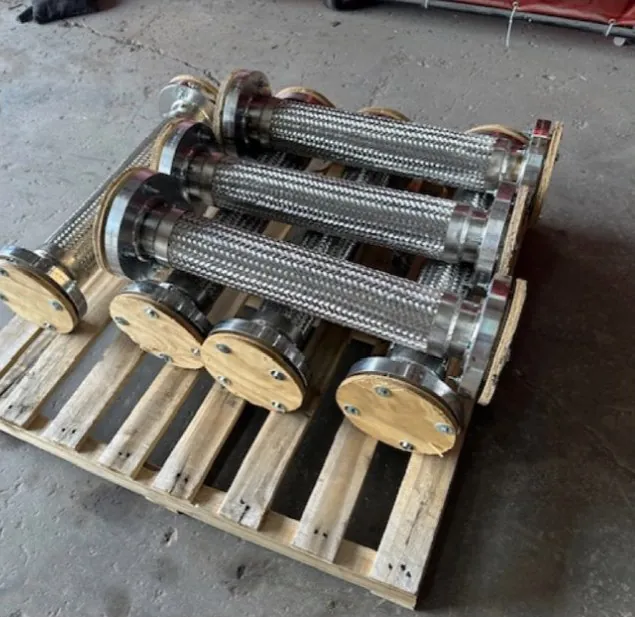
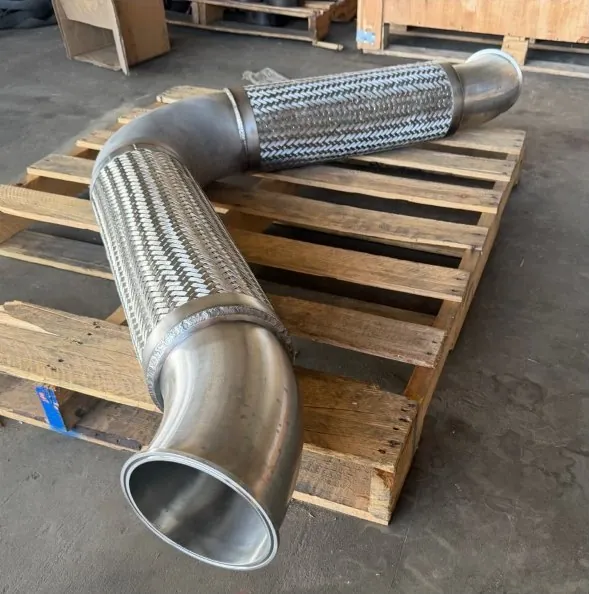
A dog leg is two legs of braided metal hose connected by an elbow, installed where a pipe changes direction. Each leg takes the movement of the pipe run it is perpendicular to, in lateral offset. That lets one assembly handle growth from two pipe runs meeting at a corner, without axial compression on the hose.
Where to use a dog leg
- Corners and direction changes where both runs grow
- Building expansion joints and structural crossings
- Intersecting piping and offset runs
- Custom equipment connections developed from drawings
Dog leg vs loop
| Assembly | Placement | Typical job |
|---|---|---|
| Dog leg | At a corner or change of direction | Movement from two pipe runs |
| U-loop | In a straight run between anchors | Thermal and seismic movement, X / Y / Z |
| V-loop | In a straight run, tight space | Shorter offset, risers |
Construction
We build 316 stainless dog legs for offset runs, intersecting piping and custom equipment connections, and special-alloy dog legs for process service, corrosive media, elevated temperature and nonstandard layouts. Each is developed from drawings and movement data. Special alloys require material compatibility and design conditions at quote; see the alloy selection guide.
Installation
As with any metal hose, flexing must stay in the plane of the bend, the hose must not be twisted while bolting up, and the piping must be anchored and guided so the movement reaches the hose as intended. Review guides and supports with the movement data. See the installation guide.
From the Technical Reference
Tools for this job
Free tools you can use now, then email the result to Patriot FTS for a quote.
Ratings and dimensions are confirmed by Patriot FTS at quote.