What braid does on a metal hose
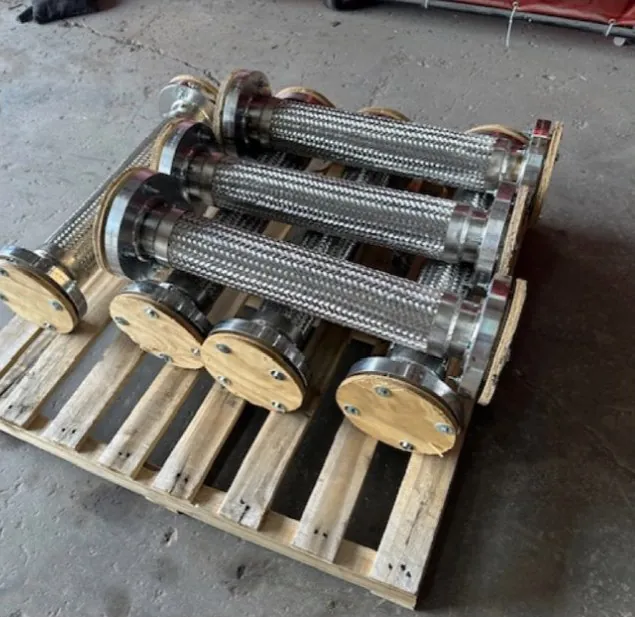
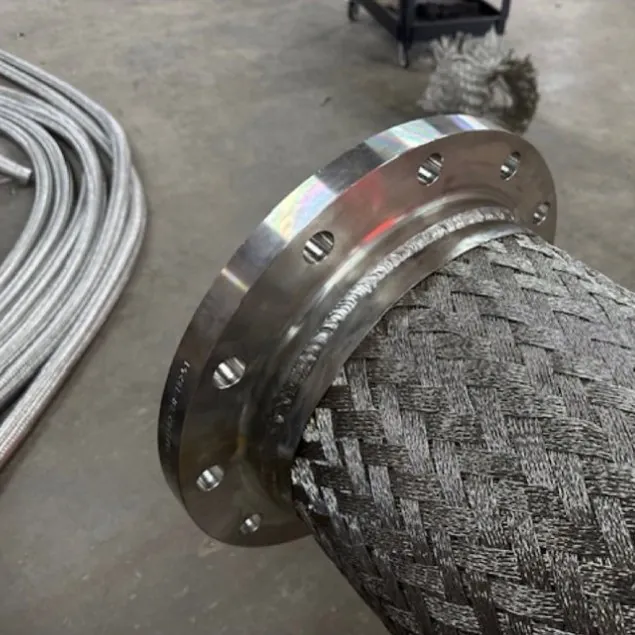
An unbraided corrugated hose under pressure tries to stretch out like an accordion. Braid restrains it. Braid is the primary pressure-carrying element in a metal hose assembly: it holds the hose to its shape so it can operate at higher working pressure. Because the braid is welded to the fittings at both ends, it also carries the axial force from pressure and protects the corrugated core from abrasion and impact.
Standard braid is 304L or 316L stainless. 304L is common for general service; specify 316L braid where the outside of the hose sees chlorides or corrosive atmosphere.
How much does a second braid layer add?
It does not double the rating. With two layers, the inner braid takes the load first and stretches until the outer layer starts sharing it. Because the load is not split evenly, the typical increase is about 1.6 times the single-braid rating.
Interactive: single vs double braid
Pick a hose size and construction, move the braid slider between no braid, single braid and double braid, then raise the pressure. The braid layers change color as they take load, and the table shows the catalog values for each option.
Braid load is a simplified illustration of how two layers share pressure, not a design calculation. Ratings are catalog values for annular corrugated 321/316 stainless hose at 70°F. Final ratings and dimensions are confirmed by Patriot FTS at quote. Metal Hose Selector · Ask Patriot FTS
Published examples
| Series / size | Single braid (1B) | Double braid (2B) | Ratio |
|---|---|---|---|
| P4, 1/2" | 1,240 | 1,980 | 1.6 |
| P4, 2" | 532 | 850 | 1.6 |
| 700, 1" | 571 | 914 | 1.6 |
| 800, 2" | 810 | 1,296 | 1.6 |
| P3, 1" | 796 | 955 | 1.2 |
PSIG at 70°F, published maximum working pressures. P3 is a flexible lightweight series and gains less from a second layer. Full values on the pressure rating chart.
How to choose
Single braid when
- The single-braid rating covers working and surge pressure with margin
- You want maximum flexibility and lower weight
- Vibration isolation is the main job
Double braid when
- Pressure exceeds the single-braid rating
- Pressure surges, pulsation or water hammer are present
- Extra protection for the core is worth some stiffness
Remember the fittings. A double-braid hose rated over 1,000 psi is still limited to 230 psi if it carries a 316L Class 150 flange. Our specification guide walks through it.
From the Technical Reference
Tools for this job
Free tools you can use now, then email the result to Patriot FTS for a quote.
Ratings and dimensions are confirmed by Patriot FTS at quote.