Which spec covers what
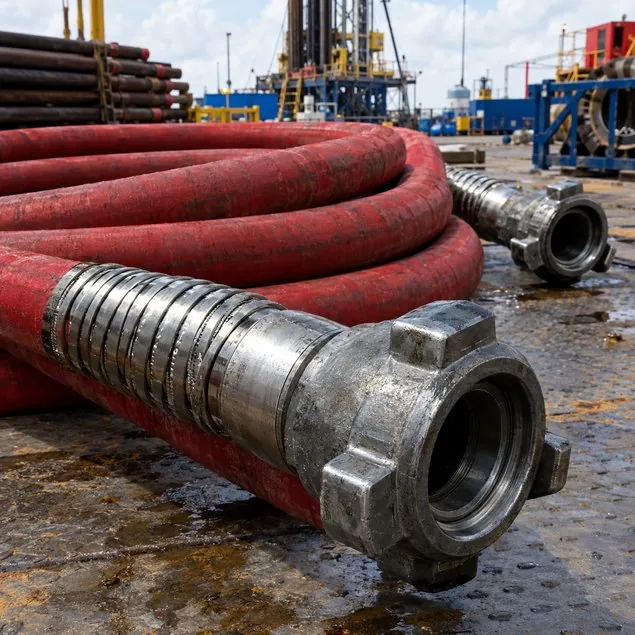
- API Spec 7K covers drilling and well-servicing equipment, including high-pressure mud and cement hose: rotary, vibrator and jumper hose, and cement hose.
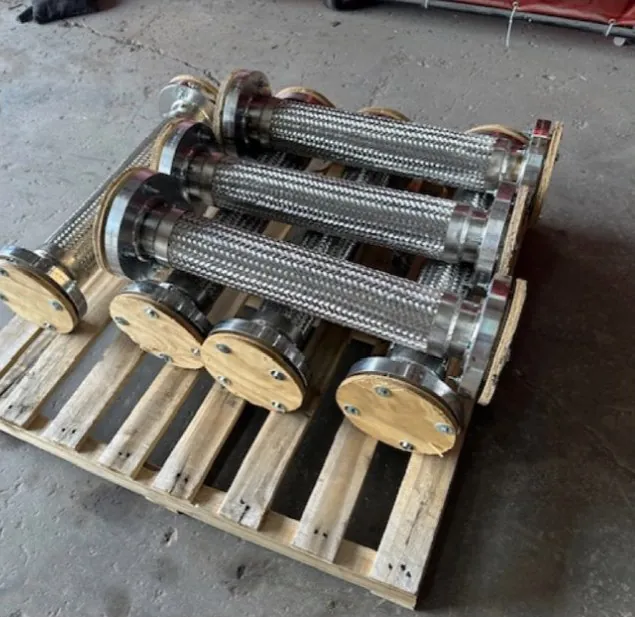
- API Spec 16C covers choke and kill equipment, including flexible choke and kill lines.
- API Spec 16D covers control systems for well-control equipment, including the hydraulic control lines to the BOP stack.
API 7K and FSL levels
API 7K hose is ordered by Flexible Specification Level (FSL), which sets how the hose design is verified:
- FSL 0 is for cement hose only. It covers the design verification tests except the pulsating pressure tests.
- FSL 1 is for rotary, vibrator and jumper hose in normal service.
- FSL 2 is for rotary, vibrator and jumper hose likely to see high-frequency pressure pulsations above 1,000 psi (6.9 MPa).
If pulsation is wearing out hose early, the API guidance is to consider a hose with a higher FSL.
API 16C choke and kill
Flexible choke and kill lines connect the riser or BOP to the choke manifold. Under API 16C, each flexible line assembly gets a hydrostatic body test, and the second hold period lasts at least one hour. The lines also carry a fire test requirement, so they are typically built with insulating and fire-resistant layers under a steel armor cover.
API 16D BOP control
BOP control lines have to keep working in a fire. API 16D requires control lines to a surface-mounted BOP stack or diverter in a Division 1 area to hold the hose’s rated working pressure in a 1,300°F (700°C) flame for 5 minutes. That is why BOP hose has a fire-resistant cover, often red, and protected end fittings.
Typical ranges
| Type | ID, in. | Working pressure, psi | Specification |
|---|---|---|---|
| Rotary hose | 2–6 | 5,000–7,000 | API 7K, FSL 1 / FSL 2 |
| Cement hose | 2–3 | 10,000 | API 7K, FSL 0 |
| Choke and kill hose | 2–4 | 5,000–15,000 | API 16C |
| BOP control hose | By system | Matched to the control system | API 16D |
Reference ranges. The rating of your assembly is the one on its certificate and tag.
What we need
- API spec and FSL
- Size and overall length
- Working pressure
- End connections (hammer union, flange, hub)
- Temperature rating needed
- Certificates and test reports required
Tell us the certification your operator or contractor requires and we will quote hose that carries it. We also inspect, retest and recertify rig hose; see hose inspection and recertification.
From the Technical Reference
Tools for this job
Free tools you can use now, then email the result to Patriot FTS for a quote.
Ratings and dimensions are confirmed by Patriot FTS at quote.